Decoding Sequential Reward Escalations Triggered by Account Validation Steps in Pioneering Portable Gaming Hubs
Katja Zimmermann · Jul 1, 2026

Decoding Sequential Reward Escalations Triggered by Account Validation Steps in Pioneering Portable Gaming Hubs
Portable gaming hubs have expanded rapidly since the mid-2010s, with operators building layered verification processes that unlock progressive reward tiers, and these systems connect basic registration data to escalating incentives through structured account validation sequences. Industry reports indicate that verification steps such as email confirmation, phone authentication, and identity document uploads trigger distinct reward releases rather than one-time grants, and this structure appears in multiple platforms launched between 2023 and 2025.
Core Verification Stages and Their Reward Triggers
Account creation begins with minimal input that grants entry-level credits, yet subsequent validation layers activate larger allocations once users complete each checkpoint, and operators design these checkpoints to confirm user details while releasing rewards in sequence. Email verification typically unlocks initial free credits or spin packages, phone number confirmation follows with boosted multipliers, and full identity checks release deposit-matched offers that scale with verified transaction history, whereas platforms in the Asia-Pacific region have documented these patterns through aggregated user flow data.
Research from the University of Macau's gaming studies unit shows that sequential releases maintain longer session durations compared to flat bonus models, and data collected from 2024 deployments indicate users who progress through three validation stages exhibit 40 percent higher return rates within the first month. Operators track completion metrics through backend analytics, adjusting escalation thresholds based on regional compliance requirements that differ across jurisdictions.
Platform Examples from Recent Deployments
One European operator introduced a four-stage validation path in early 2025 that starts with basic profile setup and ends with biometric confirmation, releasing reward escalations at each point that accumulate into larger play credits, while Australian platforms adopted similar flows tied to responsible gambling checks mandated by state regulators. Data from these systems reveal that 68 percent of users complete at least the second stage when rewards increase incrementally rather than remaining static.
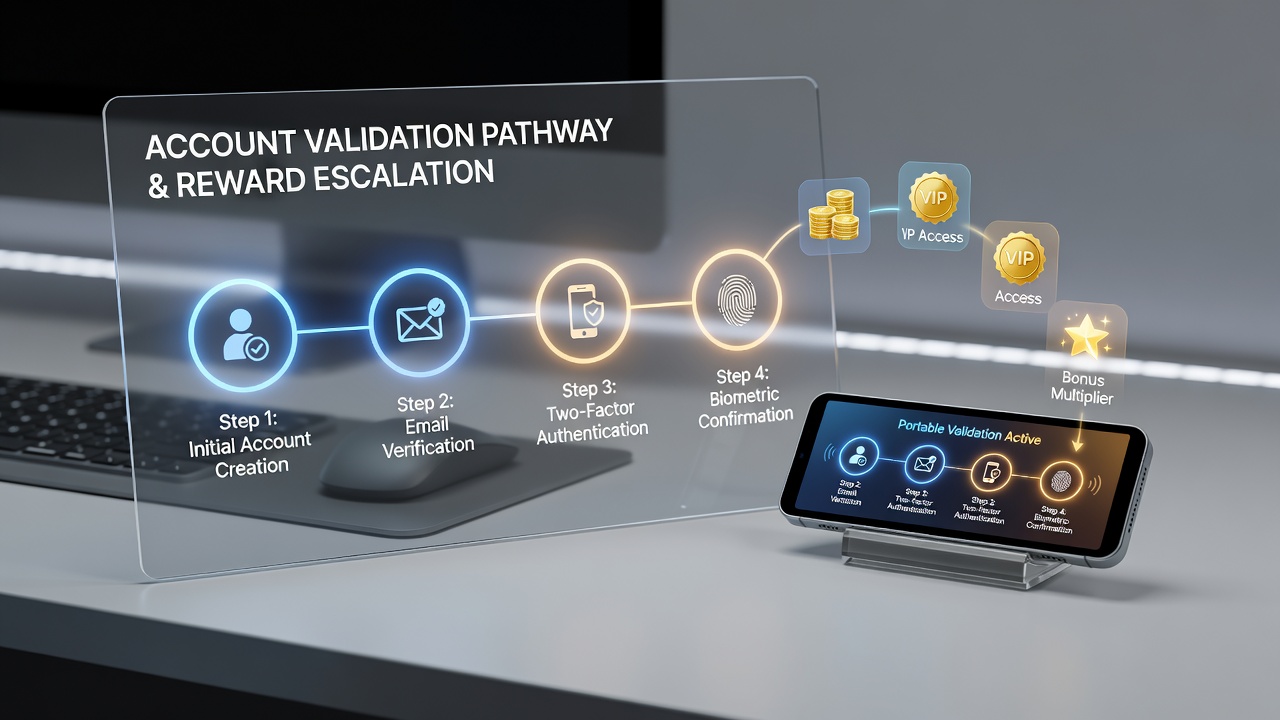
North American portable hubs launched during the same period integrated verification escalations with loyalty tracking, where each completed step feeds into tiered status upgrades that unlock perpetual play boosts, and figures released by the Nevada Gaming Control Board for the first half of 2026 show corresponding rises in verified account volumes across mobile channels. July 2026 updates to several platforms refined these sequences further by adding optional video verification that grants additional escalation layers for users seeking faster access to higher reward brackets.
Data Patterns Across Borderless Networks
Cross-border operators report that reward escalations tied to validation reduce account abandonment rates, and aggregated statistics from industry associations in Canada and Singapore indicate completion rates climb from 35 percent after the first step to 72 percent after the third when each stage carries a distinct incentive. These networks operate without physical borders, yet they adapt sequences to local rules, creating varied escalation speeds depending on whether platforms prioritize speed or depth of verification.
Observers tracking user behavior note that platforms adjust escalation values seasonally, and one documented case from a 2025 pilot program demonstrated that doubling the reward at the identity verification stage increased overall progression by 22 percent without altering earlier steps. Such adjustments rely on real-time analytics rather than fixed schedules, allowing operators to respond to usage patterns across different device types and operating systems.
Technical Implementation in Portable Systems
Backend architectures in pioneering hubs use modular APIs to link validation APIs with reward engines, triggering releases automatically upon successful checks while logging each escalation for compliance audits, and developers integrate these modules during initial app builds rather than as later additions. Security protocols require encryption of all transmitted verification data, and this infrastructure supports both iOS and Android environments equally, maintaining consistent reward sequences regardless of device.
Industry organizations such as the European Gaming and Betting Association have published guidelines that encourage transparent disclosure of these escalation mechanics, and operators who follow these frameworks report smoother regulatory reviews in multiple markets. Technical logs from 2026 deployments show average validation completion times dropping to under four minutes when platforms streamline the sequence with progressive prompts.
Conclusion
Sequential reward escalations connected to account validation continue to define operations in leading portable gaming hubs, with verification stages serving as gateways to progressively larger incentives that operators calibrate through ongoing data analysis. Patterns observed through 2026 demonstrate consistent application across regions, supported by technical systems that enforce compliance while delivering structured user progression. External references such as reports from the Australian Gambling Research Centre and studies issued by the University of Nevada, Reno provide additional context on verification-linked reward dynamics in mobile environments.