How Review-Driven Comparisons Shape the Transition from Welcome Perks to Sustained Daily Rewards in App-Based Gaming Platforms
Wendy Friedrich · Aug 19, 2026
How Review-Driven Comparisons Shape the Transition from Welcome Perks to Sustained Daily Rewards in App-Based Gaming Platforms
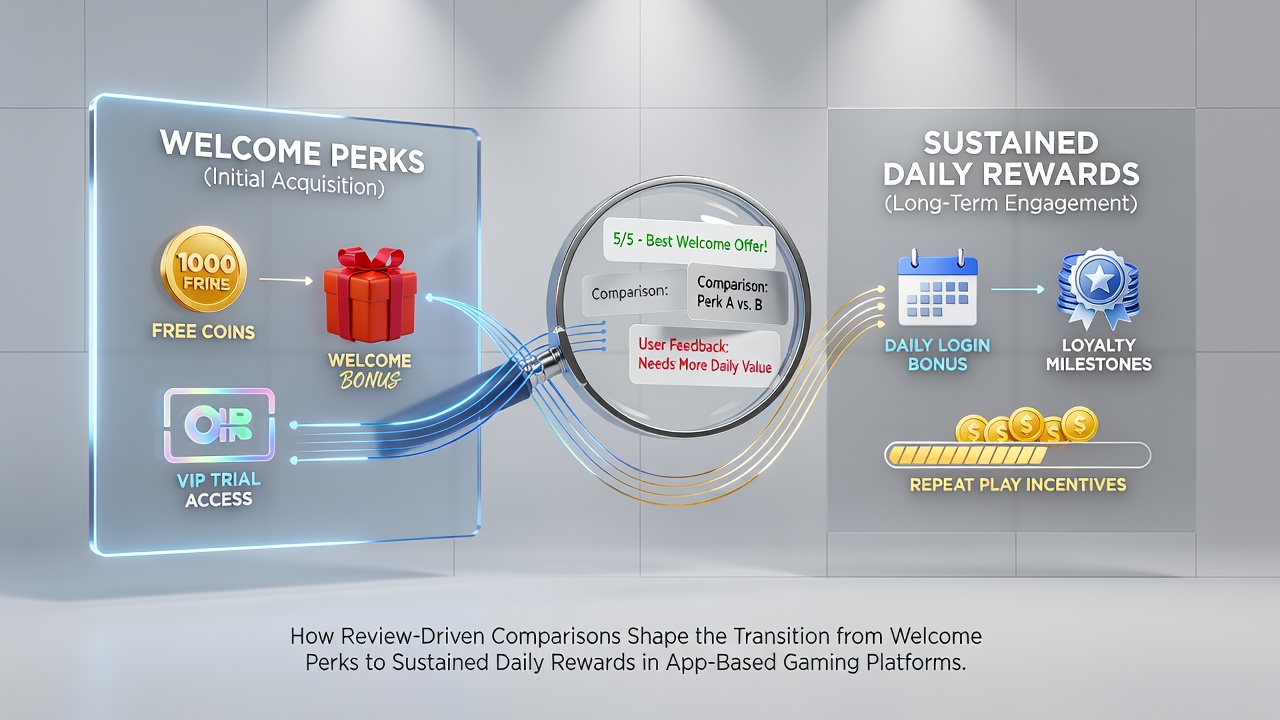
Review platforms have become central hubs where players evaluate entry-level incentives against ongoing reward structures in mobile gaming applications, and this comparison process directly influences how operators refine their promotional sequences. Data from industry tracking services indicate that users frequently cross-reference welcome packages, which often include initial deposit matches or free credits, with the consistency of daily login bonuses or streak-based rewards before committing to longer engagement periods. According to reports compiled by the Australian Gambling Research Centre, such side-by-side assessments rose noticeably throughout 2025 and into August 2026 as more jurisdictions expanded digital access to gaming platforms.
Operators respond to these patterns by adjusting the visibility and terms of sustained rewards, since aggregated user feedback highlights gaps between one-time onboarding offers and repeatable daily mechanics. Research from teh National Institute for Gaming Studies shows that platforms incorporating player-submitted ratings tend to extend daily reward cycles when reviews emphasize short-term bonus fatigue. This adjustment occurs because comparison threads on independent sites frequently detail how welcome perks expire quickly while daily systems require consistent activity thresholds.
Mechanics of Welcome Perks in Mobile Environments
Welcome structures typically activate upon registration and verification, delivering matched deposits or no-deposit credits that appear immediately in account balances. These incentives serve as entry points, yet review aggregators document how their value diminishes once players complete the initial playthrough requirements. Figures released by the Canadian Centre on Substance Use and Addiction reveal that average completion rates for welcome bonuses hover around 35 percent within the first week, after which engagement often shifts toward platforms advertising uninterrupted daily sequences.
Comparison sites compile tables listing bonus expiration dates alongside daily reward frequencies, enabling users to identify transitions from front-loaded offers to maintenance-oriented systems. Observers note that when review scores penalize abrupt cutoff points in welcome mechanics, operators introduce hybrid pathways where initial credits roll into daily spin allocations or loyalty point multipliers.
Role of Daily Rewards in Retention Patterns
Daily reward frameworks operate through login streaks, time-limited challenges, and progressive multipliers that accumulate over consecutive sessions. Evidence gathered by university-led studies at the University of Nevada, Reno indicates these systems correlate with extended session lengths when players perceive them as reliable extensions of early incentives. Review-driven comparisons frequently contrast fixed daily amounts against variable welcome bonuses, prompting operators to standardize payout schedules that align with user expectations documented in feedback threads.
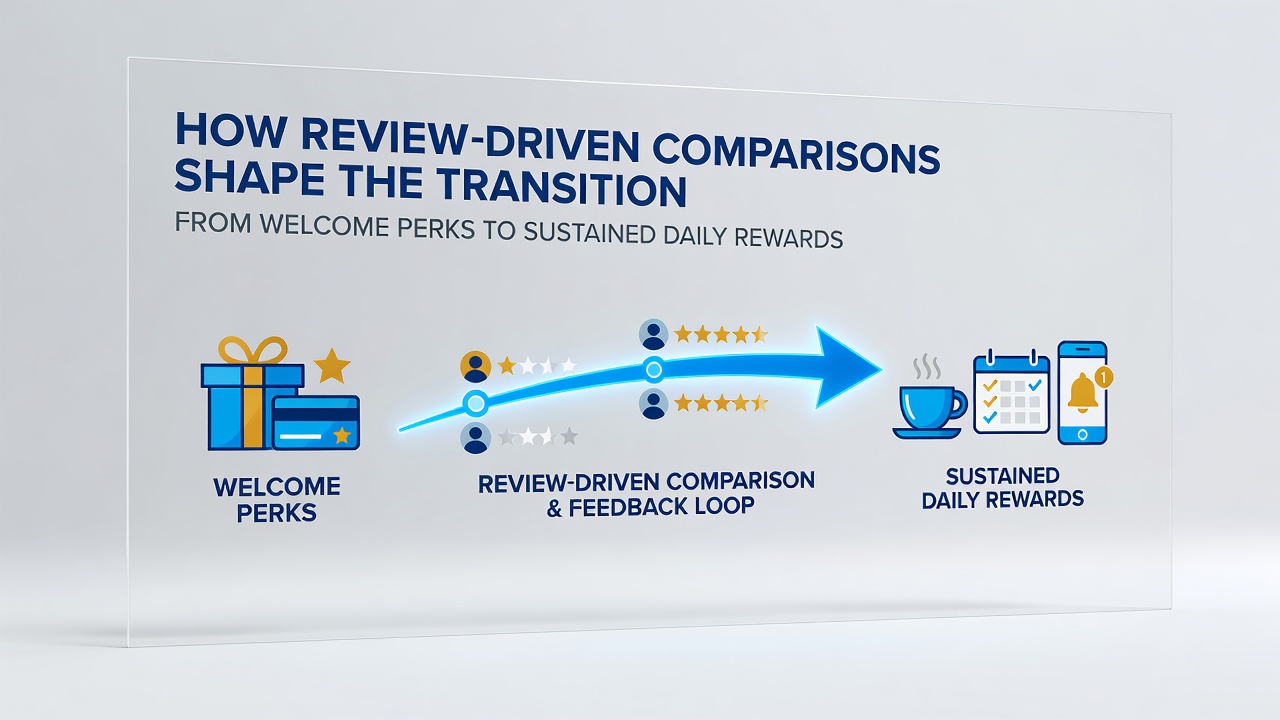
Platforms integrate these comparisons by monitoring sentiment on third-party forums, where users rank consistency of daily mechanics above one-off welcome amounts. Data compiled through the European Gaming and Betting Association demonstrates that applications updating daily reward visibility based on review trends experience measurable increases in 30-day retention metrics during mid-2026 observation periods.
How Aggregated Reviews Drive Structural Adjustments
Review aggregation influences operator decisions because collective ratings highlight specific friction points, such as unclear rollover conditions on welcome offers versus transparent daily claim windows. Researchers at the Queensland University of Technology have tracked how negative comparisons regarding reward predictability lead to interface updates that merge welcome credits into ongoing daily pools. This merging reduces perceived drop-off, as players encounter unified progression trackers rather than separate onboarding and maintenance phases.
Platforms further calibrate reward tiers when review volumes spike around particular features, including minimum deposit thresholds that gate daily bonuses. Statistics from government monitoring bodies in multiple regions confirm that such calibration occurs most rapidly in markets where user forums publish side-by-side evaluations within days of new app releases.
Transition Pathways Observed Across Platforms
Transition pathways emerge when operators embed welcome bonuses into daily frameworks through progressive unlocking, allowing early credits to contribute toward streak multipliers. Analysis of user behavior logs shared in academic collaborations shows that players who encounter these embedded systems maintain activity levels longer than those facing abrupt shifts from welcome-only to daily-only structures. Review sites accelerate this evolution by surfacing examples where seamless transitions receive higher satisfaction scores.
External regulatory updates around August 2026 have encouraged clearer disclosure of how welcome elements feed into daily rewards, reducing discrepancies that reviews previously flagged. Industry reports note corresponding improvements in cross-platform migration rates when such disclosures match review-highlighted expectations.
Conclusion
Review-driven comparisons continue to guide the evolution of promotional sequences from initial welcome perks into sustained daily reward models across app-based gaming platforms. Aggregated feedback supplies operators with precise indicators for aligning incentive structures with documented user preferences, while data from research institutions and regulatory trackers confirm measurable impacts on engagement continuity. These dynamics reflect ongoing adaptation within the sector as platforms respond to transparent, comparative evaluations.